

DNA Encoded Library Market to Reach US$726.2 Mn by 2033 | Persistence Market Research
DNA encoded library (DEL) market
DNA encoded library market driven by advanced drug discovery technologies, rising chronic diseases, and growing adoption in pharma and research sectors.
LONDON, UNITED KINGDOM, March 17, 2026 /EINPresswire.com/ -- The global DNA encoded library (DEL) market is witnessing strong growth, driven by increasing demand for efficient and scalable drug discovery technologies. The market is expected to reach US$299.3 million in 2026 and expand to US$726.2 million by 2033, registering a CAGR of 13.5% during the forecast period. This growth is fueled by rising chronic disease prevalence, advancements in combinatorial chemistry, and rapid progress in next-generation sequencing technologies that enable screening of vast chemical spaces.
Download Your Free Sample & Explore Key Insights: https://www.persistencemarketresearch.com/samples/34131
Market Dynamics
Growth Drivers
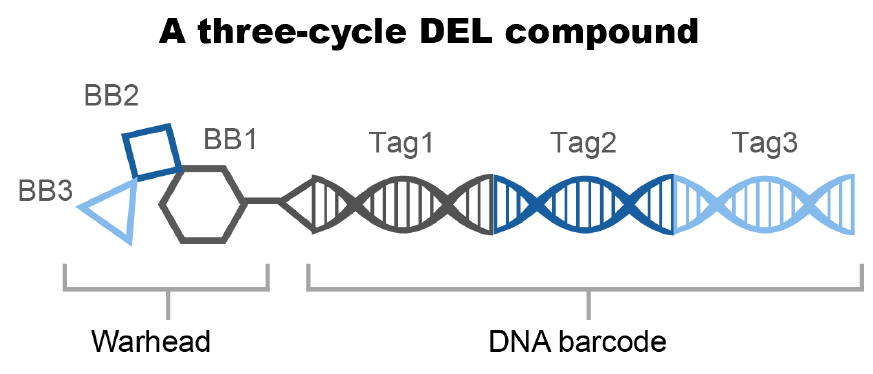
Technological advancements in combinatorial chemistry and sequencing are central to the expansion of the DEL market. These technologies allow researchers to generate and screen billions to trillions of compounds simultaneously using DNA tags as molecular barcodes. This significantly improves efficiency compared to traditional high-throughput screening methods. Additionally, improvements in sequencing infrastructure have enhanced the speed and accuracy of decoding compound libraries, enabling faster identification of potential drug candidates.
The growing burden of chronic diseases such as cancer, cardiovascular disorders, and autoimmune conditions is also accelerating the adoption of DEL platforms. These diseases require targeted therapies, and DEL technologies provide a cost-effective and rapid approach to identifying high-affinity binders. Increased investments in drug discovery and public health initiatives further strengthen demand for advanced screening solutions.
Market Restraints
Despite its advantages, the DEL market faces challenges related to hit validation and compound resynthesis. After initial screening, compounds must be synthesized without DNA tags and revalidated through additional assays. Many hits fail during this stage, increasing costs and extending timelines. Limited laboratory capacity and resource constraints also hinder the efficient progression from hit discovery to lead optimization.
Intellectual property concerns and data ownership issues present additional barriers. Disputes between library providers and pharmaceutical companies over ownership of compounds and screening data can delay collaborations and reduce commercial flexibility. Complex regulatory requirements for data handling and submission further add to operational challenges.
Opportunities
The increasing focus on neurological disorders presents a significant opportunity for DEL technologies. Diseases such as Alzheimer’s and Parkinson’s require novel therapeutic approaches, and DEL platforms enable exploration of complex biological targets. Enhanced library designs incorporating brain-penetrant molecules and diverse chemistries improve the likelihood of identifying viable candidates for central nervous system therapies.
Strategic partnerships between pharmaceutical companies and contract research organizations (CROs) are also driving market growth. Outsourcing early-stage drug discovery allows companies to access specialized DEL platforms without significant capital investment. This trend supports scalability, reduces costs, and accelerates drug development timelines.
Get Custom Insights Designed for Your Businecss: https://www.persistencemarketresearch.com/request-customization/34131
Segment Analysis
By Therapeutic Area
Oncology dominates the DEL market, accounting for approximately 38% of the share in 2026. The complexity of cancer biology and the need for precision medicine drive demand for large-scale compound screening. DEL platforms are particularly effective in identifying molecules targeting protein-protein interactions and difficult-to-drug pathways.
Neurological disorders represent the fastest-growing segment due to increasing disease prevalence and unmet medical needs. Advances in DEL design and integration with computational tools are enhancing discovery efficiency in this area.
By End User
The pharmaceutical and biopharmaceutical sector holds over 45% of the market share, driven by extensive R&D activities and increasing reliance on external discovery platforms. These organizations leverage DEL technologies to accelerate hit identification and improve pipeline productivity.
Academic and research institutions are also emerging as key contributors, particularly in early-stage discovery and rare disease research. Government funding and collaborative initiatives support the adoption of DEL technologies in these settings.
Regional Insights
North America leads the global DEL market, accounting for around 41% of the share in 2026. The region benefits from strong research infrastructure, high R&D investments, and a well-established pharmaceutical industry. Collaborative ecosystems and regulatory support further enhance technology adoption.
Europe follows with significant contributions from academic research and cross-border collaborations. Strong expertise in chemical biology and supportive funding frameworks promote innovation in DEL technologies.
Asia Pacific is the fastest-growing region, driven by expanding biotechnology sectors, increasing government investments, and growing CRO presence. Countries such as China, Japan, and South Korea are actively integrating DEL platforms into drug discovery workflows, boosting regional growth.
Checkout Now & Download Complete Market Report: https://www.persistencemarketresearch.com/checkout/34131
Competitive Landscape
The DEL market is moderately consolidated, with key players focusing on innovation in library design, encoding chemistries, and data analytics. Companies are investing in advanced technologies such as AI-driven compound design to enhance screening outcomes. Strategic collaborations, licensing agreements, and CRO partnerships are common strategies to expand market presence and improve service offerings.
Overall, the DNA encoded library market is poised for sustained growth, supported by technological innovation, rising healthcare demands, and increasing collaboration across the pharmaceutical ecosystem.
Market Segmentation
By Therapeutic Area
Oncological Disorders
Immunological Disorders
Neurological Disorders
Respiratory Disorders
Dermatological Disorders
Cardiovascular Disorders
Infectious Diseases
Other
By Application
Hit Generation/Identification
Hit to Lead
Hit Validation/Optimization
Others
By End-user
Pharma/Biopharma Industry
Academic/Research Institute
Other
By Regions
North America
Europe
East Asia
South Asia & Oceania
Latin America
Middle East & Africa
Read Related Reports:
Dengue Rapid Tests Market: Dengue rapid tests market to grow from US$423.4 Mn in 2026 to US$631.2 Mn by 2033, driven by record dengue cases and rising point-of-care testing demand.
Diabetes Wearables Market: The diabetes wearables market to grow from US$14.3 Bn in 2026 to US$30.6 Bn by 2033, driven by rising diabetes cases and demand for continuous monitoring.
Persistence Market Research
Persistence Market Research Pvt Ltd
+1 646-878-6329
email us here
Visit us on social media:
LinkedIn
Instagram
Facebook
YouTube
X
Legal Disclaimer:
EIN Presswire provides this news content "as is" without warranty of any kind. We do not accept any responsibility or liability for the accuracy, content, images, videos, licenses, completeness, legality, or reliability of the information contained in this article. If you have any complaints or copyright issues related to this article, kindly contact the author above.
