

Ginger Beer Market to Hit US$ 9.04 Billion by 2035 at 7.5% CAGR, Fueled by Premium Mixology and Health Trends
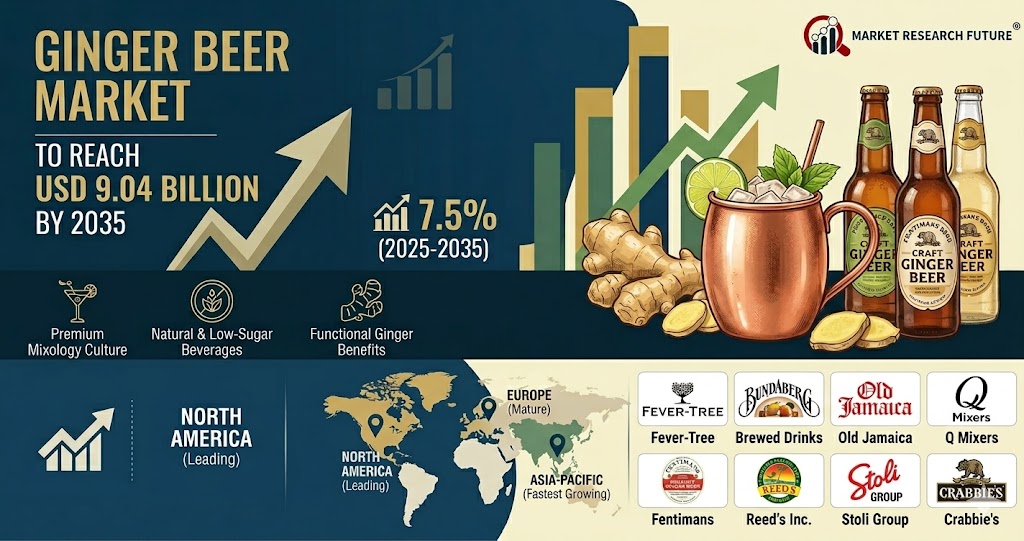
Ginger Beer Market
This market expansion is propelled by two major consumer movements: the rapid global expansion of high-end mixology and cocktail cultures, and a structural transition toward naturally fermented, lower-sugar adult beverage options. Additionally, legislative interventions across more than 50 nations targeting sugar-sweetened beverages have motivated consumers to transition toward premium ginger-infused drinks that deliver robust, complex flavor profiles without high sugar levels.
Core Drivers and Market Trends:
1. Mixology Surge and Cocktail Culture
Ginger beer has shifted from a specialty mixer to an indispensable bar staple, heavily driven by the enduring global popularity of cocktails like the Moscow Mule and the Dark 'n' Stormy. Hospitality data indicates that food and beverage establishments have steadily expanded their ginger beer configurations to meet consumer demand for diverse flavor intensities.
2. Premiumization and Artisanal Positioning
Modern beverage consumers are increasingly treating craft ginger brews as affordable luxuries, showing a clear willingness to pay premium prices for small-batch, authentic formulas over traditional, mass-produced sodas. Craft-centric brands continue to capture a growing share of overall category revenue.
3. Regulatory Pressures and Sugar Taxes
Fiscal policies such as the UK’s Soft Drinks Industry Levy and similar excise taxes globally have created a clear economic and formulation advantage for naturally fermented ginger drinks that utilize authentic ginger root and balanced sweetness profiles.
Strategic Macro-Opportunities:
1. Functional and Holistic Wellness Integration
Thanks to the natural wellness associations of ginger root—such as digestive comfort and anti-inflammatory attributes—brands are positioned to capture market share within the broader global functional beverage sector.
2. Ready-to-Drink (RTD) Collaboration and Product Integration
The explosive growth of pre-mixed canned cocktails offers a natural collaborative opportunity for ginger beer producers to partner with top-tier spirit brands for premium, co-branded canned offerings.
3. Geographic Expansion in High-Growth Regions
Emerging markets across South Asia and Africa present vast, untapped opportunities where general carbonated soft drink consumption is rising rapidly, but artisanal ginger beer penetration remains low.
Inherent Market Challenges:
1. Agricultural Supply Chain Volatility
Ginger cultivation remains highly concentrated in key origins such as India, China, Nigeria, and Indonesia. Environmental shifts and monsoon discrepancies can spark sudden shifts in raw material costs, creating operational margin pressures for producers committed to authentic ginger extraction over artificial flavoring.
2. Alternative Category Pressure
The sector faces ongoing shelf-space and market-share competition from adjacent functional and alternative alcoholic categories, notably kombucha lines and hard seltzers.
Request PDF Sample Copy: https://www.marketresearchfuture.com/sample_request/23025
Comprehensive Segment Breakdown:
1. By Product Type
Non-Alcoholic Ginger Beer: This segment represents the clear foundation of the industry, capturing roughly 62% of global revenue. Its dominance is supported by broad availability across mainstream retail channels, grocery formats, and its dual role as both a standalone soft drink and a primary mixology base.
Alcoholic Ginger Beer: Experiencing rapid growth with an estimated CAGR of 8.9%, this sub-segment benefits directly from the expansion of craft brewing facilities and consumers seeking distinct flavor profiles within traditional alcoholic beverage channels.
Diet / Low-Calorie Ginger Beer: Fueled by a global focus on calorie reduction, this category is expanding rapidly as brands reformulate using alternative natural sweeteners like stevia and monk fruit to appeal to health-focused shoppers.
2. By Application
Cocktail Mixer: Accounting for approximately 38% of total market valuation, this segment remains a powerful commercial engine, closely tied to the global commercial success of classic long drinks and artisan restaurant bar programs.
Standalone Beverage: Thriving as a refreshing alternative to traditional soft drinks, this format attracts adult consumers looking for complex, sophisticated flavors without alcohol.
Cooking and Culinary: A specialized but steady niche where the pungent, sweet-and-spicy profile of ginger beer is integrated into marinades, baking, and gourmet reduction sauces.
3. By Distribution Channel
Off-Trade (Retail): Mainstream retail operations, including supermarkets, specialty grocery outlets, and big-box hypermarkets, constitute the primary volume driver, outpacing on-trade establishments by a 1.7:1 ratio.
On-Trade (HoReCa): Encompassing hotels, premium cocktail lounges, bars, and restaurants, this channel serves as a vital touchpoint for brand discovery and high-margin premium placements.
E-Commerce: Positioned as a highly dynamic channel, digital commerce allows specialized, artisanal startups to reach nationwide consumer audiences directly, side-stepping traditional retail slotting fees.
Regional Landscape Analysis:
North America: Holds the leading market position, commanding an estimated 34% global revenue share. Growth across the United States and Canada is largely anchored by a robust on-premise mixology landscape and high consumer demand for premium home bar mixers.
Europe: Represents the second-largest global territory, accounting for approximately 28% of the market with a valuation of USD 1.23 billion. Consumption is deeply rooted in the United Kingdom, which serves as a historic and mature hub for both traditional brewed botanicals and modern craft iterations.
Asia-Pacific: Highlighted as the fastest-growing region, projected to advance at an industry-leading CAGR of 9.2% through 2035. This expansion is powered by rising discretionary spending power and steady brand introduction across key urban demographics in Australia, Japan, and India.
Recent Industry Developments:
January 2025: Leading producers announced a combined capital allocation exceeding USD 320 million dedicated strictly to expanding domestic small-batch fermentation infrastructure to meet surging off-trade volumes.
May 2025: Major multi-national grocery groups introduced premium private-label ginger beer product lines across North America and Europe, targeting price-conscious shoppers with high-quality alternatives priced below national brands.
November 2025: Key craft mixer organizations established exclusive co-branding agreements with international spirits conglomerates to supply customized ginger beer formulations for premium, pre-mixed canned cocktail lines.
March 2026: Leading manufacturers initiated zero-carbon brewing certifications and shifted regional packaging pipelines entirely to highly recyclable aluminum formats to meet environmental benchmarks.
June 2026: Supply chain consortiums implemented advanced shelf-stable fermentation methodologies and updated cold-chain logistics networks to expand export opportunities into emerging regions across South Asia.
Strategic Profiles of Top Competitors:
Fever-Tree: An international leader in the premium mixer category, renowned for its strict ingredient sourcing strategy. The company focuses heavily on pairing real botanicals with distinct ginger varieties to retain its dominant share in high-end hospitality and retail environments globally.
Bundaberg Brewed Drinks: An iconic Australian family-owned institution celebrated for its traditional, multi-day craft brewing process. Utilizing real ginger and cane sugar, the brand commands significant volume shares across the Asia-Pacific region and continues to expand its international retail presence.
Old Jamaica (Refresco): Positioned as an authentic, flavor-forward staple, the brand is highly regarded for its bold, spicy Jamaican root ginger profile, maintaining a powerful market foothold across Europe and the UK retail sectors.
Q Mixers: A prominent US-based premium brand engineered specifically to complement high-quality spirits. Highly carbonated and less sweet, its formulations are widely distributed across top-tier retail chains and elite cocktail bars.
Fentimans: A historic UK pioneer of botanically brewed beverages, delivering deep multi-layered flavor profiles through traditional fermentation practices that appeal directly to artisanal drink enthusiasts.
Reed's Inc.: A long-standing leader in the American natural grocery channel, acclaimed for its clean-label formulations featuring significant quantities of fresh ginger root combined with raw honey and fruit juices.
Stoli Group (Stoli Ginger Beer): Strategically developed by the global spirits powerhouse to capitalize directly on the mixology movement, offering a perfectly balanced flavor profile designed to maximize the quality of classic Moscow Mules.
Crabbie's (Halewood): An industry pioneer in the alcoholic ginger beer space, famous for its historic Scottish heritage, long maceration processes, and distinctive spiced flavor innovations that bridge the gap between traditional cider and craft beer.
Future Outlook:
The steady trajectory of the global ginger beer market highlights a major structural shift in consumer preferences, moving toward authentic, flavor-forward, and premium beverage options. Moving toward a projected market valuation of USD 9.04 Billion by 2035, the category is successfully transitioning from a simple cocktail mixer to a sophisticated, standalone functional beverage option.
Industry leaders like Fever-Tree, Bundaberg Brewed Drinks, and Reed’s Inc. continue to drive growth through clean-label transparency, sustainable production methods, and supply chain improvements. For beverage manufacturers, hospitality groups, and retail distributors, the ginger beer sector offers a highly resilient and lucrative opportunity within the evolving global beverage ecosystem.
Browse More Reports:
Low Alcohol Beer Market
https://www.marketresearchfuture.com/reports/low-alcohol-beer-market-27484
Wheat Beer Market
https://www.marketresearchfuture.com/reports/wheat-beer-market-38062
Gluten-free Beer Market
https://www.marketresearchfuture.com/reports/gluten-free-beer-market-7144
Chocolate Beer Market
https://www.marketresearchfuture.com/reports/chocolate-beer-market-4994
Sagar Kadam
Market Research Future
+1 628-258-0071
sales@marketresearchfuture.com
Visit us on social media:
LinkedIn
Facebook
X
Legal Disclaimer:
EIN Presswire provides this news content "as is" without warranty of any kind. We do not accept any responsibility or liability for the accuracy, content, images, videos, licenses, completeness, legality, or reliability of the information contained in this article. If you have any complaints or copyright issues related to this article, kindly contact the author above.
