

BestSalons.com Highlights the Trust Question Facing Britain's Unregulated Hairdressing Industry
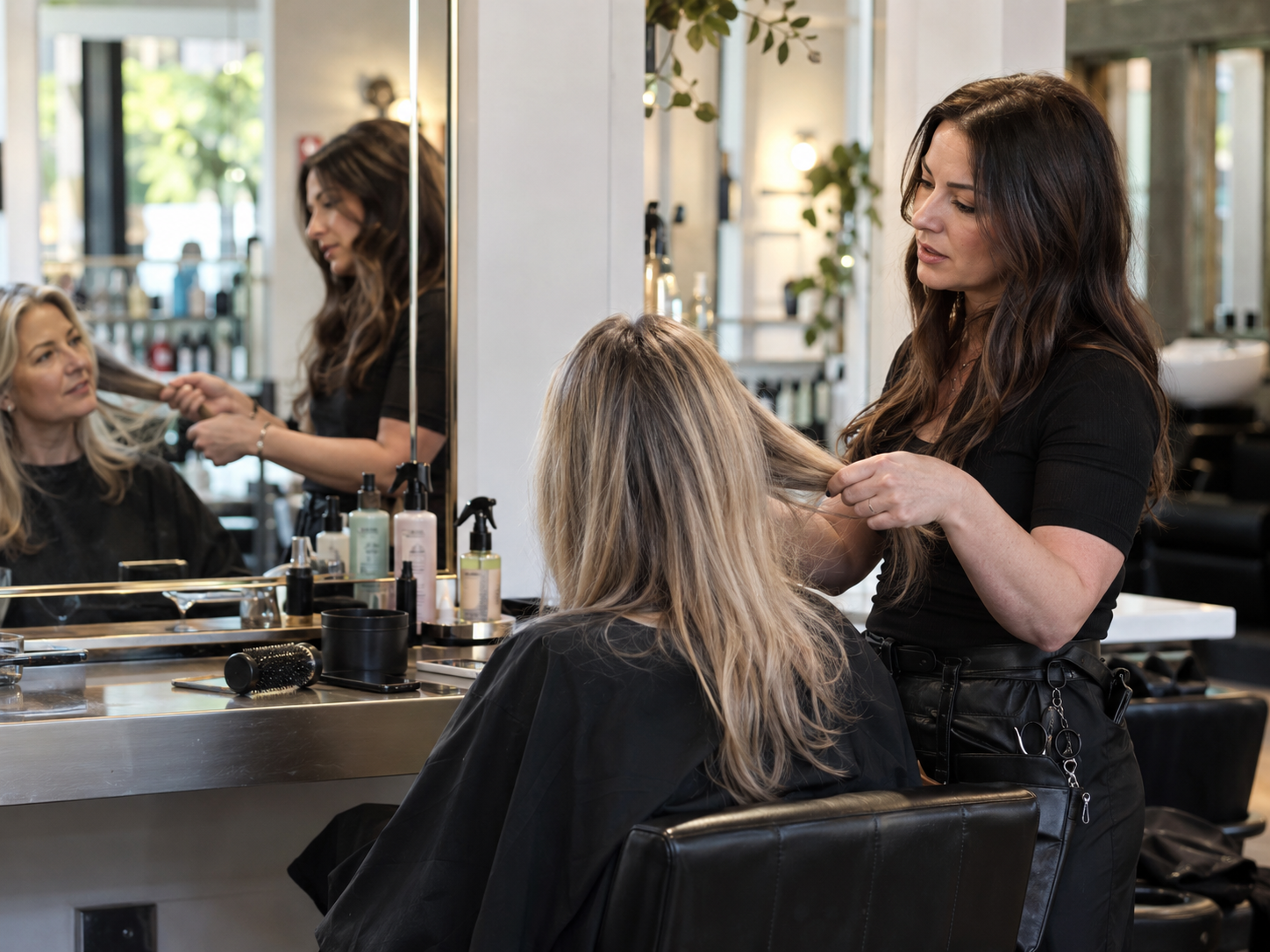
A stylist consults with a client in a modern salon, reflecting the growing importance of trust, professionalism and informed choice in the UK hairdressing industry.
Online reputation is becoming increasingly important in an industry without mandatory practitioner licensing.
UNITED KINGDOM, October 1, 2026 /EINPresswire.com/ -- Britain’s hairdressing and barbering industry supports tens of thousands of businesses, employs a significant workforce and plays an important role in communities across the country. Yet one aspect of the sector remains relatively little understood by many consumers: there is no general requirement in the UK for a person working as a hairdresser or barber to hold a mandatory practitioner licence or specified statutory qualification.A House of Commons Library research briefing published in September 2026 confirmed that hairdressers and barbers remain unregulated at practitioner level in the UK, with registration under the Hairdressers Registration Act 1964 remaining voluntary.
This does not mean the industry operates without rules.
Hairdressing and barbering businesses remain subject to consumer protection legislation, health and safety requirements and other applicable laws, while local authorities may impose requirements relating to certain premises and activities.
However, the absence of a universal practitioner licensing system creates an important distinction for consumers.
Someone searching for a salon or barber cannot necessarily assume that every individual offering professional hair services has passed through the same nationally mandated licensing or qualification process.
BestSalons.com believes this places greater importance on the information consumers can independently examine before deciding where to book.
A major industry built around independent businesses
The wider UK hair and beauty sector is substantial.
Industry data indicates that tens of thousands of hair, barbering and beauty businesses operate across the country, generating billions of pounds in annual turnover and supporting a large workforce.
The sector is also overwhelmingly made up of smaller businesses.
Independent salons, barbershops, self-employed professionals and small local operators remain central to the industry, meaning consumers are frequently choosing between individual local businesses rather than simply selecting between major national chains.
That makes trust particularly important.
For decades, successful salons and barbers have built their reputations through recommendations, repeat customers and word of mouth.
Today, that reputation is increasingly visible online.
Consumers can examine customer reviews, photographs of previous work, years in business, service information, pricing, specialist experience and the consistency of feedback before ever making an appointment.
BestSalons.com believes that this shift has fundamentally changed the way trust is established within the industry.
“Hairdressing has always been an industry driven heavily by reputation,” said a spokesperson for BestSalons.com.
“What has changed is that reputation is now much more visible. Consumers can research a business in considerable detail before they ever walk through the door.”
Digital word of mouth is becoming part of the industry's trust infrastructure
Traditional word of mouth has not disappeared.
Instead, much of it has moved online.
A recommendation that may once have travelled between friends, families and colleagues can now become part of a much larger and searchable public record.
For established businesses, that can mean years of positive customer experiences are visible to thousands of potential clients.
For consumers, it creates an opportunity to compare businesses using far more information than previous generations had available.
BestSalons.com says consumers should nevertheless avoid relying on any single measure when choosing a salon.
A high star rating alone may provide limited context.
Consumers may benefit from considering review volume, how recently reviews were written, whether feedback remains consistent over time, the services being discussed and whether the business has a substantial history of customer experiences.
“A single number cannot tell somebody everything they need to know about a business,” the BestSalons.com spokesperson said.
“The wider picture is more useful. How long has the business been operating? What are customers consistently saying? Are there examples of the work? Does the business appear experienced in the specific service the customer is considering?”
Specialist hair services make informed choice increasingly important
Modern hair businesses can provide considerably more than traditional cutting and styling.
Services may include advanced colouring, bleaching and lightening, chemical treatments, colour correction, hair extensions and other specialist procedures.
Different services can require different levels of experience, technical knowledge and consultation.
BestSalons.com believes consumers considering more complex services should therefore carry out additional research before booking.
This can include reviewing previous examples of comparable work, discussing consultation procedures, asking about relevant training or experience and understanding the aftercare required following a service.
Online reputation should form part of that assessment rather than replacing it.
The absence of mandatory practitioner licensing should also not be interpreted as evidence of poor standards throughout the industry.
Many professionals undertake extensive training, continue their education throughout their careers and build highly respected businesses through years of consistent work.
Instead, BestSalons.com says the current system places more responsibility on consumers to understand who they are booking with.
Reputation increasingly carries commercial value
The importance of consumer trust extends beyond individual appointments.
The British hair and beauty sector continues to face significant commercial pressures, including wage costs, energy prices, recruitment challenges, property costs and changing consumer spending habits.
Smaller independent businesses can be particularly exposed to these pressures.
Within this environment, reputation can have direct economic value.
Strong customer feedback can influence repeat bookings, referrals, recruitment, visibility online and the long-term strength of a local business.
This creates an environment in which good operators can increasingly build a measurable public record of their performance.
BestSalons.com believes this may become even more significant as search engines, review platforms and artificial intelligence play a larger role in recommending local businesses.
Consumers are no longer always discovering salons by typing the name of a business they already know.
Increasingly, they are asking platforms to identify the best-rated, most suitable or most relevant businesses within a particular area.
That makes the quality and transparency of the information available about those businesses increasingly important.
Consumer choice is becoming more informed
BestSalons.com believes the long-term trend is toward more informed consumer decision-making.
People can now compare local businesses in minutes, inspect years of customer feedback and investigate specialist services before committing to an appointment.
That represents a significant shift for an industry historically dominated by personal recommendation and geographical convenience.
“The fundamental currency of the hair industry remains trust,” said the BestSalons.com spokesperson.
“The difference today is that trust leaves a digital footprint. Businesses that consistently provide strong experiences can build a visible reputation over many years, while consumers have far more information available to them before deciding where to spend their money.”
BestSalons.com says the growth of digital discovery should ultimately encourage consumers to look beyond headline ratings and consider the broader evidence available about a salon, barber or individual practitioner.
In an industry without universal mandatory practitioner licensing, the ability to research reputation, experience and publicly available information is likely to remain an increasingly important part of consumer choice.
About BestSalons.com
BestSalons.com is an independent salon discovery platform covering hair salons, barbers, hair extensions, beauty salons, nails, spa and wellness.
The platform publishes city-based guides using publicly available and verifiable information to help consumers research businesses operating within their local area.
Media Contact
BestSalons.com
Hello@BestSalons.com
Best Salon journal
BestSalons.com
hello@bestsalons.com
Visit us on social media:
LinkedIn
Instagram
Facebook
Other
Legal Disclaimer:
EIN Presswire provides this news content "as is" without warranty of any kind. We do not accept any responsibility or liability for the accuracy, content, images, videos, licenses, completeness, legality, or reliability of the information contained in this article. If you have any complaints or copyright issues related to this article, kindly contact the author above.
